 Flights
Manage jet lag before, during, and after your flight with practical tips on booking smart, resting on the plane, and staying up that first day to sync fast.
Mark from the YouTube channel Wolters World knows this firsthand: he shared his best tactics while making a 27-hour journey home from Venice, connecting through Amsterdam and Atlanta along the way.
His advice breaks down into three stages: what to book and do before you leave, how to handle the flight itself, and what to do as soon as you land.
Best of all, almost none of it requires a prescription...
1. Book the Flight That Fits Your Sleep
The ticket you buy sets up everything that follows. Most US-to-Europe flights run overnight, which means you can sleep on the plane and land ready for the day.
Going the other direction, Europe to the US is often a daytime flight, so you arrive at night and sleep then instead.
Even a four-hour change between the US coasts can throw you off. Where you can control it, book an arrival in the evening or near bedtime. That way you stay up a little, then sleep at your hotel and start syncing to local time right away.
2. Prep Your Body Days in Advance
You don't have to absorb the full time change in one night. In the days before you fly, shift your bedtime earlier or later, toward the time zone you're heading to.
A seven-hour gap becomes a four-hour gap, which your body handles far more easily.
The same trick works with meals. Move lunch and dinner closer to your destination's schedule so your hunger doesn't ambush you at midnight. Fly into Japan cold and the noon munchies land at midnight.
3. Rest on the Plane, Even If You Can't Sleep
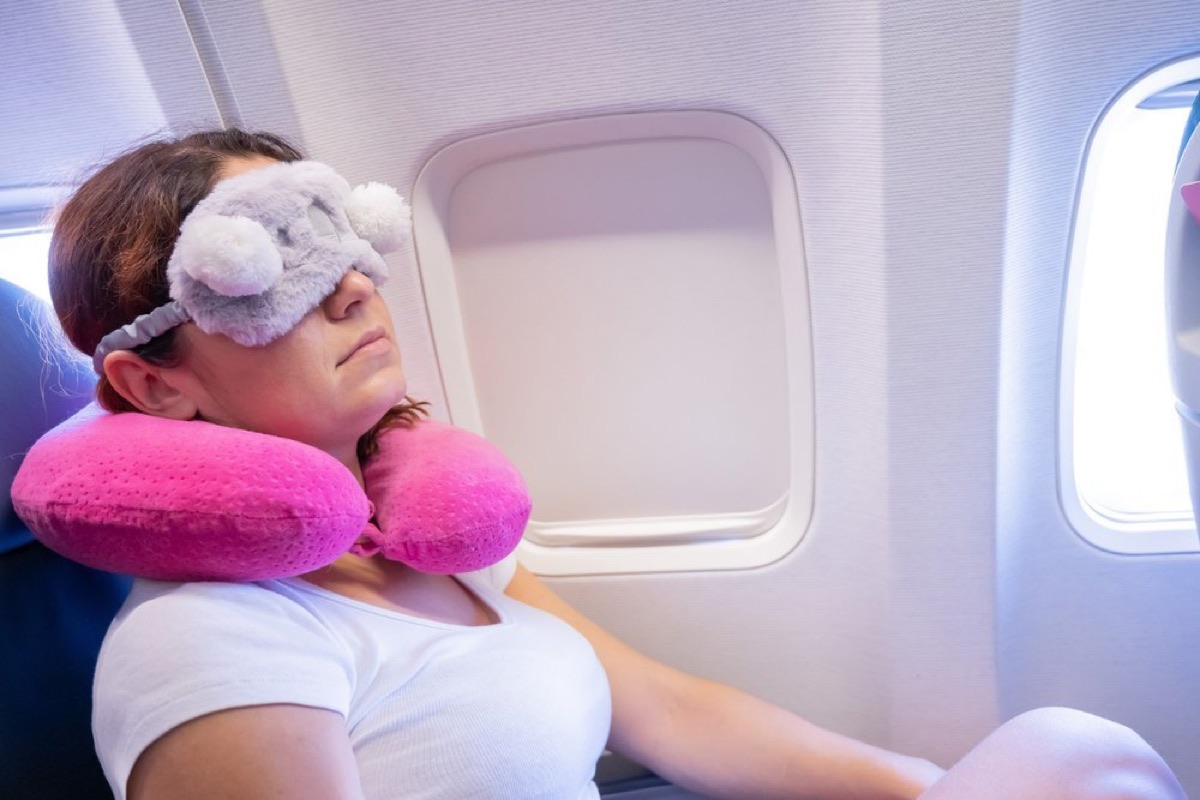
Not everyone sleeps on a flight, and that's fine. Aim for rest. Resist binge-watching the whole way through, because fighting off sleep to catch one more episode keeps you wired.
Wear loose clothing so you're not tense. Pack what helps you settle: a neck pillow, an eye mask, noise-canceling headphones.
An eye mask matters most on daytime flights, where you're trying to sleep while the cabin is awake.
Get up and walk the aisle, stretch your legs, keep the blood moving so you're not stiff on arrival. Drink the water every time the cart comes by, and drink the whole cup. Staying hydrated helps your body keep its balance.
Eat light. Greasy, heavy meals leave you sluggish and make the landing worse.

4. Use Layovers to Rest, With an Alarm
A long layover is a chance for a short nap. Just set an alarm. Travelers oversleep at the gate more often than you'd think, and the agent calling your name won't always wake you.
Pack snacks that work with your plan. Walnuts and tart cherries can help you wind down. Protein bars and complex carbs keep your energy level and head off the crash that comes a few hours after you land feeling great.
5. Don't Nap When You Land
The biggest mistake is landing at 10 a.m. and lying down for a quick nap that turns into four hours. Stay up until 6, 7, or 8 p.m., then sleep a full night. Going to bed early still counts.
If you genuinely need a nap, cap it at half an hour to an hour and a half, alarm set. Arrive after 2 or 3 p.m. and skip the nap entirely.
The next morning, don't sleep in either. Get up by 7, 8, or 9 and run a normal day. Get outside: sunlight wakes your body and helps it reset.

K
Kai Nakamura
Window-seat loyalist.